How homeowners choose a builder
An extension or loft conversion is often the biggest thing a household spends money on after the house itself, so people take their time. Many start with an architect or a set of drawings, ask friends and neighbours for names, then get two or three quotes.
Here's the bit builders often miss: even a recommended builder gets checked. Someone hears your name from a neighbour, types it into Google and lands on your website. If it looks abandoned, or shows nothing like their project, the recommendation goes cold and you never find out why.
Then the comparison starts, and it runs for weeks. Your site gets opened on a phone at lunchtime, on a laptop in the evening and shown to a partner at the weekend. It has to answer the same questions every time: have you built this before, can we trust you, and how will it actually go? Good web design for builders is mostly about answering those three well.
Builders website design that wins the shortlist
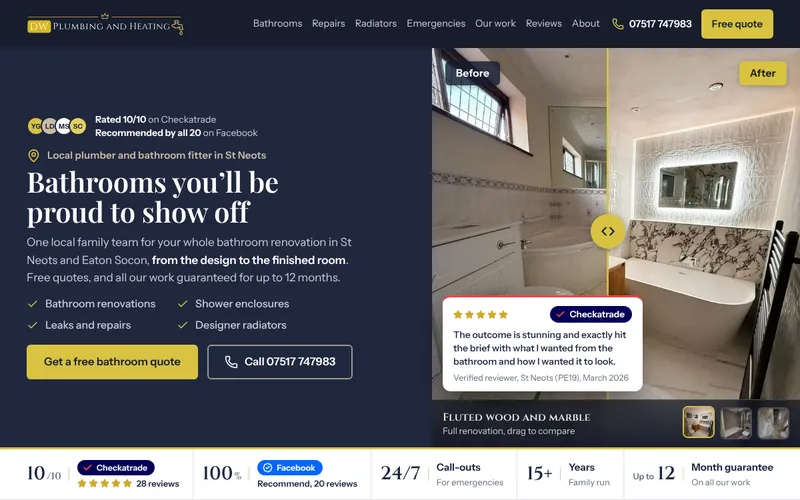
Good builders website design is built around project stories, not a gallery. A project story is a short page about one finished job:
- The type of project and the town: a single storey kitchen extension in Harrogate, say.
- What the customer wanted, and any problem you solved along the way, like a steel beam, a tricky drain run or tight access.
- Photos before, during and after. The "during" shots matter more than builders think, because they show the work that ends up hidden behind plaster.
- Roughly how long it took, and a line from the customer if they're happy to give one.
Ten of those, sorted by project type, beat a hundred photos in a slideshow. They give homeowners something to read and Google something to understand.
Alongside them, the site needs an honest page about you and your team, the towns you cover, and an enquiry form that asks about budget, timescale, drawings and planning.
Explain the job, not just the result
Most homeowners have never managed a building project. They don't know whether they need planning permission, what building control does, who draws the plans or what a party wall notice is. A builder whose website explains it calmly looks like the safe pair of hands.
You don't need to write a textbook. A "how a project works" page that walks through the steps in order does the job:
- First visit and rough budget. What you look at, and what a ballpark figure depends on.
- Drawings and permissions. Who does the plans, whether you work with an architect, and the fact that the rules vary by project. The Planning Portal's guide to extensions is a good link to give people.
- The quote. What's included, what's a provisional sum and how you handle changes.
- The build. The rough stages, how long each takes and how you keep the house livable.
- Payments. When stage payments fall due, so nobody gets a surprise.
- Sign-off. Building control completion, and what happens if something needs sorting afterwards.
A page like that does a lot of quiet selling, and it saves you answering the same questions on every first visit.
FMB, TrustMark and the proof homeowners check
Homeowners have heard the cowboy builder stories, so independent proof carries real weight. The Federation of Master Builders says its members have to pass a professional vetting and inspection process before joining, and homeowners can search its Find a Builder directory. TrustMark is the government endorsed quality scheme for work in and around the home, with its own search for registered businesses.
If you hold either, we put it near the top of every page and link to your listing, so a homeowner can confirm it in one tap. Your insurance and any insurance-backed guarantee you offer go alongside. If you don't hold either, the site leans harder on project stories and reviews, and says nothing it can't back up.
Photograph every build, start to finish
The best builder websites are built on the photos you take while you work, not the ones you remember to take at the end. A simple habit makes all the difference:
- Take a before shot on day one, from a spot you can stand in again on the last day.
- Photograph each stage: footings, blockwork, steels going in, the roof on, first fix, plastering. A weekly photo from the same spot tells the story of the build.
- Take the finished shots in daylight, once the skip has gone and the customer has moved back in, ideally with the bifolds open and the lights off.
- Ask the customer first, and keep house numbers and car registrations out of shot. Most people are happy to help a builder they're pleased with, as long as their address isn't on show.
Add one finished project every month or two and your website never looks abandoned. Each new story is another page that matches what people search for, in another town you work in.
Domestic builder or construction company?
This page is for builders who work for homeowners: extensions, loft conversions, renovations and conversions. If most of your work is commercial, tendered or done as a subcontractor for main contractors, your buyers are different people with different questions, and our page on construction company websites is the better fit. Plenty of firms do both, and one site can cover both, as long as each kind of customer has its own pages.
For the wider picture of how building firms win work today, from referrals to bought leads, see our guide to marketing for builders.
What web design for builders costs, and when it pays
Our website is £600 one-off, or £50 a month for 12 months, with no VAT and no deposit. The first year's hosting is included. You see your homepage design within 24 hours of the set-up call, before paying anything.
A worked example, with made-up numbers. Say you run a four-person firm in Harrogate and a single storey extension leaves you £8,000 after materials and wages. If the website helps you win one extra extension in a year, or swap one awkward job for a better one, it has paid for itself many times over.
The honest bit. If you're booked nine months ahead, a new website won't fix your diary. It will help you choose better jobs, and maybe charge what you're worth. And a website isn't the same as being found: once it's live, SEO for builders is how you get it in front of more people searching in your area, month to month, if you want it. To see what yours could look like first, ask for a free website mockup.




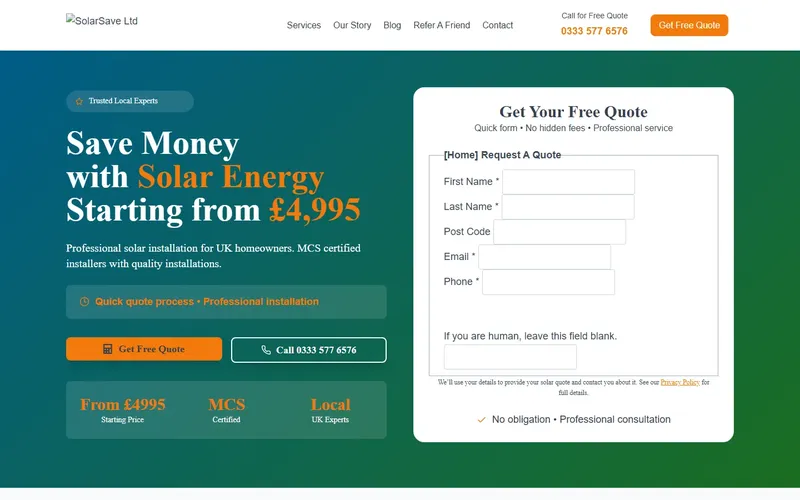
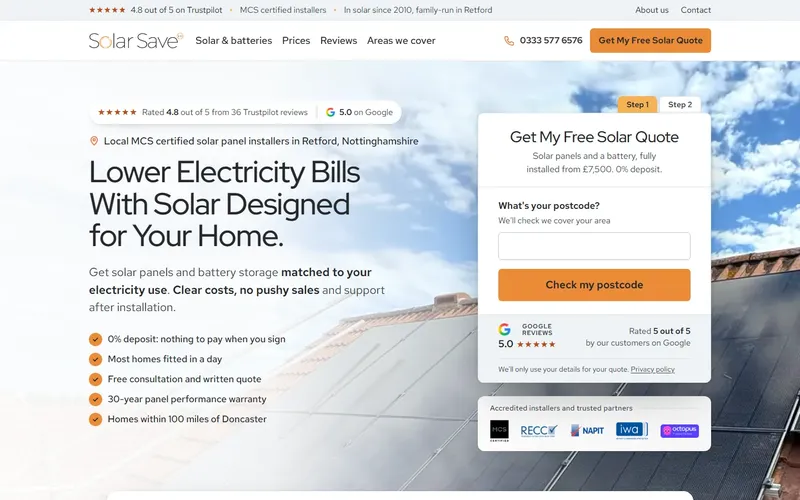



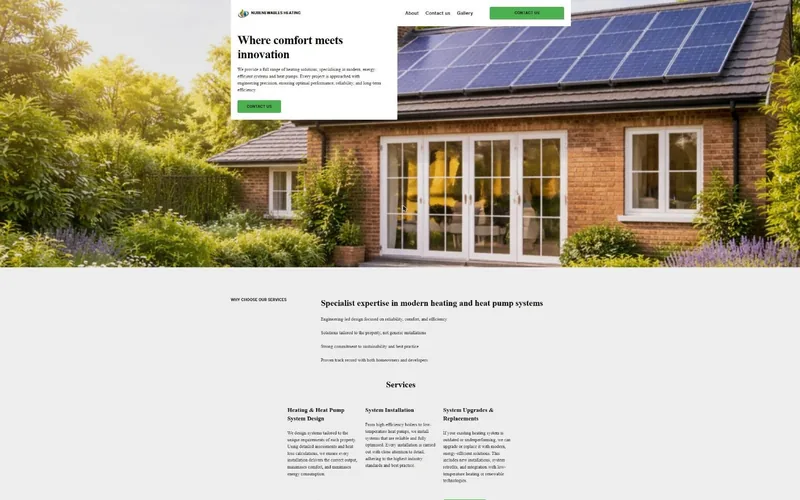 Before
 After