GoogleRated 5.0 out of 5.Read our reviews

Websites for electricians Websites that win jobs. Your website, built by a Google specialist and an energy insider.

Websites for electricians that wins rewires, consumer unit upgrades and EV charger installs. We design your homepage free within 24 hours, so you see it before you pay a penny.

Get My Free Homepage Design

No catch. We're that sure you'll love it, we risk our time, not your money.

  1. 24 hoursYour homepage, designed free
  2. You decideLove it, or walk away owing nothing
  3. 7 working daysLive, every word written for you

£600 one-off, or £50 a month for 12 months. No VAT, no interest.

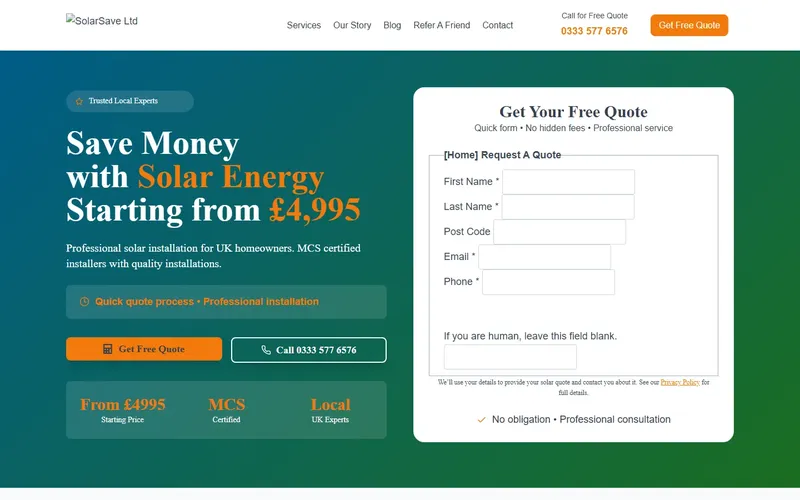
SolarSave's old website Before
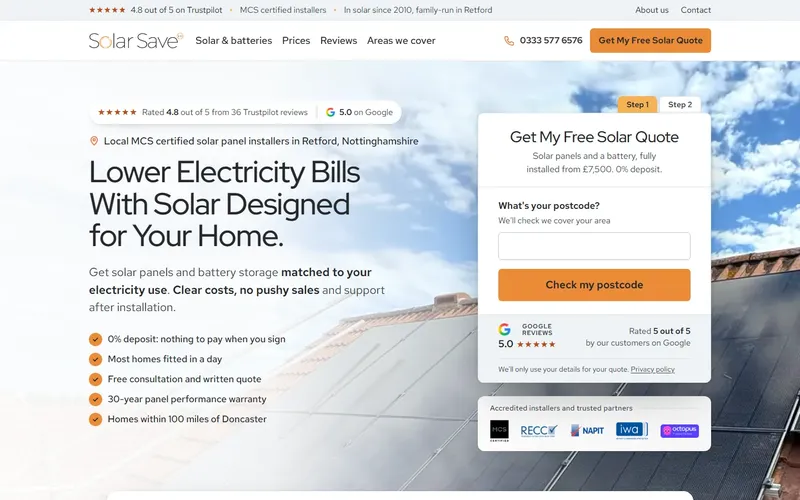
SolarSave's new renewable energy website, built by Tandy & Co After

Homepage designed in 24 hours

1341,977Times a day Google showed SolarSave's site: before launch, then two days after. It settled at about 1,500.

Google reviews

Five stars from the owners we've built for.

Google

5.0Rated 5.0 out of 5 on Google

Real reviews, in their own words.

  • SolarSave
  • NuRenewables Heating
  • DW Plumbing and Heating
Be our next review

Rated 5 out of 5 on Google3 enquiries within two days of going live

“What can I say!? Absolutely outstanding service, James has totally transformed my company website to a level I never expected!

From going live on Saturday the 17th of October I have already had 3 enquiries!!!! We are now on the 19th of October writing this review.”

James LoftusOwner, SolarSave · Google review

Rated 5 out of 5 on Google

“Excellent service and very meticulous service! Can’t recommend highly enough and the expertise and knowledge in building my website how I wanted it and even better than expected and the details and constant communication well done and many thanks your a star . Much appreciated, many thanks again 100%”

Kirk FergusonNu Renewables Heating Limited · Google review

Rated 5 out of 5 on Google

“Amazing service from James can't recommend him enough... Really helped me setting up my business page. Goes above and beyond to make sure you're happy. Lovely guy as well. 10/10 service”

Dean WesternDW Plumbing and Heating · Google review

The problem

What people check before they ring an electrician

Electrics make people nervous, and nervous people check. An electrician's website has to answer these four questions before anyone picks up the phone.

  • Are you registered?

    In England and Wales, a new circuit or a consumer unit change is notifiable work under Part P. Your NICEIC, NAPIT or other scheme registration, with a link to check it, settles the question before it's asked.

  • Can you sort it today?

    For tripping circuits, no power or a burning smell, the first electrician who looks local and answers gets the job. Show your areas and keep a call button on screen the whole time.

  • Do you do landlord work?

    Landlords in England need the electrics in every rental checked at least every five years. A landlord page tells letting agents you're set up for EICRs, and agents come back.

  • Will you leave a mess?

    Photos of neat consumer units, straight cable runs and made-good walls, plus reviews that mention tidiness, do more than writing "fully qualified" ever will.

What's on your site

The pages an electrician's website needs

Google ranks pages, not businesses. Each job you want more of gets its own page, written for what people actually type, like "fuse box replacement" or "EV charger installation".

  • yoursite.co.uk/house-rewires

    House rewires

    Your biggest domestic job. What a rewire involves, how many days you're there, whether the family can stay in, and photos that prove you leave it tidy.

  • yoursite.co.uk/consumer-unit-upgrades

    Consumer unit upgrades

    Fuse box replacements for people who've been told theirs is old. How long the power's off, and the certificate they get at the end.

  • yoursite.co.uk/eicrs-for-landlords-and-agen

    EICRs for landlords and agents

    How you book, how quickly the report arrives, how you quote remedial work, and how you handle an agent with a long list of properties.

  • yoursite.co.uk/ev-charger-installation

    EV charger installation

    Home chargers for people who've just bought an electric car. The chargers you fit, what your survey checks and roughly how long the install takes.

  • yoursite.co.uk/fault-finding-and-emergency

    Fault finding and emergency electrician

    Tripping, no power and burning smells. Short, plain English and built around one big call button for someone standing in the dark.

  • yoursite.co.uk/area-pages

    Area pages

    A page for each town you cover, with real jobs from there, so you show up for "electrician near me" where you actually work.

A general web designer

  • Home
  • About
  • Services
  • Contact

Your site, built by us

  • Home
  • House rewires
  • Consumer unit upgrades
  • EICRs for landlords
  • EV charger installation
  • Fault finding
  • Area pages
  • Our work
  • Reviews
  • Get a quote

Website examples

Real websites, real businesses.

Three recent builds: a heat pump installer, a solar company, and a plumbing and heating firm. Same promise every time: you see it before you pay.

Heat pumps and heating · London, Herts, Beds and Essex

NuRenewables Heating

  • 27 pagesEvery service, four area pages and four advice articles
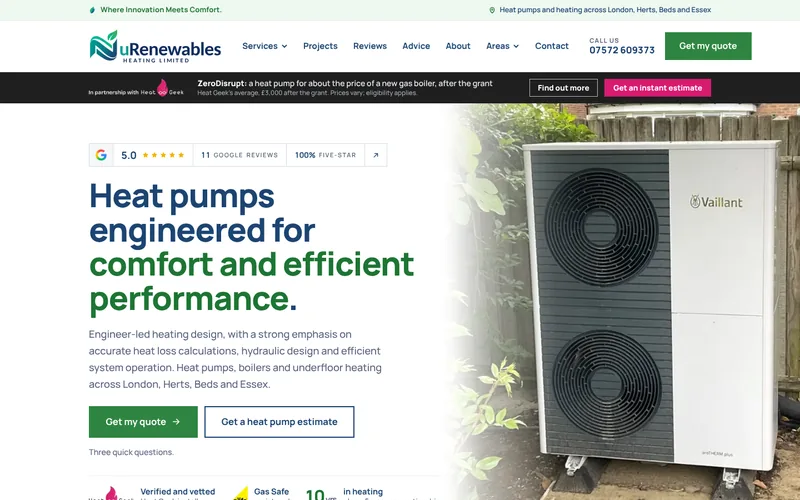
  • Heat Geek offer up frontZeroDisrupt and an instant estimate, right under the menu
  • Accreditations firstHeat Geek and Gas Safe next to the first button
See the live site
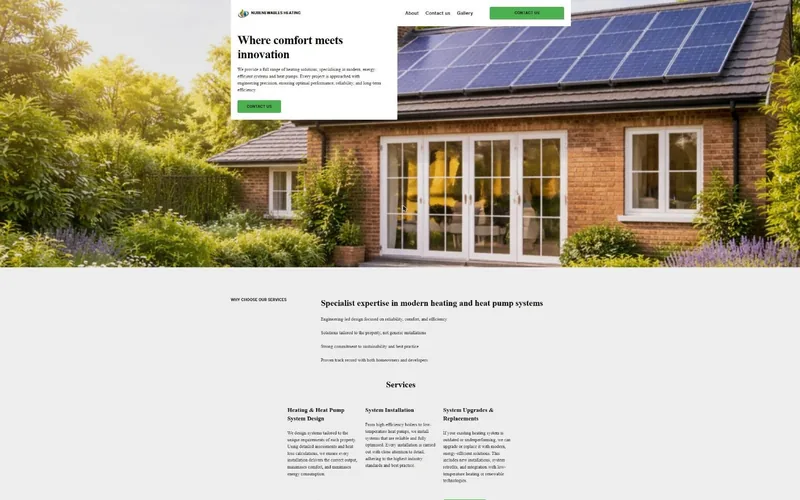
NuRenewables Heating's old heat pump installer website Before
NuRenewables Heating's new heat pump installer website, built by Tandy & Co After
SolarSave's new solar website

Solar and batteries · Retford

SolarSave

1341,977Times a day Google showed the site: before launch, then two days after. It settled at about 1,500.

A 72-page site with SEO on top, so more than the £600 package. Clicks were still about 4 a day in that first week.

Read the case study
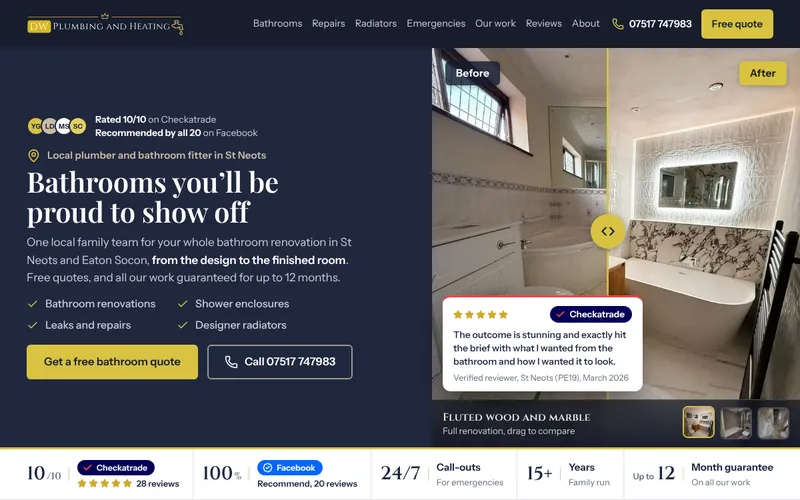
DW Plumbing and Heating's website

Plumbing and heating · St Neots

DW Plumbing and Heating

Within a dayof seeing his free design, Dean went ahead

Built around his before-and-after work and reviews.

See the live site

What it costs

Website design at one fixed price, every part listed.

No quote to wait for and no day rates. Here's everything in a website from us.

  • A fully branded 20-page websiteAll the creative design and development, custom coded for speed. No templates or page builders.

  • Every word written for youAll the content, written and checked with you. You never type a thing.

  • Built for Google from day oneEvery page set up for the searches homeowners make, with Search Console connected.

  • A page for every job you want more ofRewires, consumer unit upgrades and EV charger installs. Google sends people to the right page.

  • The code Google reads, on every pageInvisible to users. Gives Google clear information on what you install and where.

  • A trust section that sells for youReviews, photos of your work, and the accreditation badges you hold, up front.

  • Your grants and finance, shown properlyIf you offer them. Finance only where you're allowed to promote it.

  • One-tap enquiriesHomeowners call, WhatsApp or message you with one tap.

  • Tracking you can check yourselfYour visits and enquiries, in your own account.

  • The switch handledOld pages redirected and your email untouched. Your current site stays up until launch.

  • The first year's hostingNothing extra to pay to keep it online.

  • 90 days of tweaks and supportWant something changed after launch? Message us and it's done.

Built for electricians

What's different about a electrician website.

  • A page for every electrical job

    Rewires, consumer units, EICRs, EV chargers and fault finding each get their own page, built around the searches people make.

  • Your registration, shown properly

    Your NICEIC or NAPIT registration, and TrustMark if you hold it, with a link to the register so customers can check you themselves.

  • A way in for landlords

    A landlord and letting agent page with its own enquiry form, alongside one-tap calls for faults and quote forms for planned work.

See it first

See your homepage before you pay a penny.

No deposit, no card details and nothing to sign. If you don't love it, you walk away and owe nothing.

Get My Free Homepage Design SEE IT FIRST · PAY ONLY IF YOU LOVE IT ·
  1. Step 1 · Today

    Answer a few questions

    By email. Your business, what you do and the areas you want work from.

  2. Step 2 · Within 24 hours

    We design your homepage

    Designed and written for you, and sent as a link you can open on your phone.

  3. Step 3 · You decide

    Only pay if you want it

    Love it, and we build the rest. If not, you owe nothing.

How it works

Live in 7 working days. Hardly any work for you.

Here's every step, start to finish. Most of them are ours.

  1. Day 1

    A quick call

    Or a few questions by email.

  2. Within 24 hours

    Your homepage design

    Free, and yours to look over.

  3. When you're ready

    You approve it

    Pay once or set up the monthly plan, then send your photos.

  4. Within 7 working days

    Your site goes live

    Every page built and checked with you, on your own domain.

  5. The next 90 days

    Tweaks and support

    Message us and it's done.

What it takes from you

  • A few answers about your business
  • Photos of your work. Phone photos are fine
  • A look over the pages before launch
Stephanie and James, who design and build every Tandy & Co website
StephanieDesign and branding · 13+ years in energy JamesSEO and strategy · 10+ years in SEO

Who builds it

Two people. No handoffs.

There's no account manager and no junior. The two people you talk to are the two people who build your site.

  • Stephanie designs it, from the layout to your branding. She brings 13+ years in the energy industry, and an eye for what makes a homeowner trust a firm.
  • James builds it for Google. He plans every page around what homeowners search for, and tests on our own sites first.
  • You deal with us directly. Same-day replies, seven days a week, from 6am to midnight.

“We will never lie to a client, even when telling the truth costs us money.”

James and Stephanie

One firm per trade, per area

Your town is yours.

We take one firm per trade in the town where they're based. It doesn't cover everywhere they're willing to travel. Once we build your website, we won't take on another firm in your trade based in your town. Plenty of designers build for the firm down the road. We won't.

When a town's taken, it's taken.

  • Taken

    Solar · RetfordSolarSave

  • Taken

    Heat pumps · RainhamNuRenewables Heating

  • Taken

    Plumbing · St NeotsDW Plumbing and Heating

Map of the UK showing the two towns already taken: solar in Retford, and heat pumps in RainhamRetfordRainham
Taken by a client. Everywhere else is open, for now.

Your options

Your own website, ads or bought leads?

Your own website
£600 once, or £50 a month for 12 months. Enquiries come to you only, and the site is yours to keep.
Google Ads
Quick to start. You pay for every click, and enquiries stop the day you stop paying.
Bought leads
Quick to start. You pay for every lead, it's often shared with other firms, and enquiries stop when you stop.

The guide

Electrician website design, explained.

Websites for electricians: how people choose who to ring

Electrics are the one part of the house most people won't touch, and that shapes how they pick an electrician. They're not just asking "who's nearest?" They're asking "who won't make this worse?"

Three kinds of customer land on an electrician's website, and each wants something different:

  • Homeowners with a problem. The lights tripped and won't reset, half the sockets are dead, or there's a smell of burning near the fuse box. They want someone local who answers now.
  • Homeowners with a project. A rewire before they move in, a new consumer unit, an EV charger for the car that arrives next month, power out to a garden room. They compare two or three websites over a week.
  • Landlords, agents and businesses. Letting agents booking EICRs, a shop that needs its emergency lighting tested, a builder looking for a sparky to subcontract to. They want to see you can handle volume and paperwork.

Say you're an electrician in Wakefield who's tired of single-socket call-outs and wants more rewires and charger installs. Your website can't make small jobs disappear, but it can stop advertising you as the person for them. The jobs you lead with, the photos you show and the forms you offer decide what kind of enquiries arrive.

Electrician website design: the jobs and the pages they need

A website with one "Services" page listing rewires, sockets, lighting, testing, EV chargers, solar and alarms gives Google nothing strong to rank for any of them. A page per job does, and it gives every customer a page about their actual problem.

JobWho's searchingWhat the page has to show
Full rewireBuyers of older houses, people renovatingWhat's involved, days on site, living in during the work, photos of the making good
Consumer unit upgradePeople told their fuse box is old or unsafeWhy it's changed, how long the power's off, the certificate they get
EICRs and landlord testingLandlords and letting agentsBooking, report turnaround, remedial quotes, pricing for several properties
EV charger installationNew electric car ownersThe chargers you fit, what the survey checks, a guide price
Fault findingAnyone with tripping or dead circuitsAreas, hours, call-out charge, a call button
Commercial workShops, offices, owners of commercial unitsTypes of building, accreditations, insurance, a few written-up projects

EV chargers are worth singling out. People search for them as a job in their own right, usually soon after buying the car, and the page that wins is the one that answers their questions: which charger, where it goes, how long it takes.

Then add a page for each town you genuinely cover, with jobs you've done there. Pushing all of those pages up the results in the months after launch is what SEO for electricians is for. The website is the foundation it builds on. When we rebuilt a solar installer's site and changed nothing else, Google started showing it about ten times as often within two days (here's what happened).

NICEIC, NAPIT and Part P: showing your registration

Registration matters more for electricians than for almost any other trade, because the rules give customers a reason to ask.

Part P and competent person schemes

In England and Wales, some domestic electrical work is notifiable under Part P of the Building Regulations: a new circuit, a consumer unit replacement, and adding to or altering circuits in a special location such as a bathroom. An electrician registered with a government-authorised competent person scheme can self-certify that work instead of the customer going to building control, and gives the homeowner a certificate of compliance. The authorised schemes are listed on gov.uk, and include Certsure (the company behind NICEIC) and NAPIT.

Homeowners can check any registered electrician on the Registered Competent Person Electrical register, by postcode or company name. So your website should name your scheme and link to where customers can check it. That one link does more than a row of badges.

Landlord EICRs

In England, private landlords must have the electrical installation in each rental inspected and tested by a qualified person at least every five years, and give tenants proof it's been done. That's set out in the government's guide for landlords, and it's why a landlord page earns its place on your site.

Only what you hold

TrustMark, approved installer status with the charger makers you fit, membership of a trade association: if you hold it, it goes where customers decide. If it's lapsed or you never had it, it doesn't appear. We don't add badges for decoration, and we'd rather leave a gap than have a customer catch you out.

Photos and proof that sell an electrician

Electrical work is hard to photograph well, which is exactly why the electricians who bother stand out. The shots that sell:

  • Before and after consumer units. An old fuse box with rewirable fuses next to a neat, labelled new board is one of the most persuasive photos an electrician can show.
  • Tidy cable runs and making good. Clipped, straight and filled. People fear chased walls and dust everywhere, so show them you don't leave it like that.
  • Chargers on real driveways. The unit on the wall, the cable run neatly, captioned with the town.
  • Your face and your van. People want to know who's coming into the house.

Reviews work best next to the job they describe: a rewire review on the rewire page, a charger review on the charger page. Never write them yourself or let anyone do it for you.

Calls, quote forms and the landlord route

Faults come in by phone. On a phone screen your number should be tappable on every page and visible without scrolling. Someone standing in a dark hallway with a torch isn't filling in a form.

Planned work arrives by form as often as by phone. People pricing a rewire or a charger tend to browse in the evening, so a short form (name, number, postcode, what they want done) catches them. A rewire form can ask how many bedrooms and whether the house is lived in. A charger form can ask where the car parks. That saves you a wasted visit.

Landlords and agents need their own way in, because they're booking work across several addresses. And for the calls you miss while you're in a loft or isolated at the board, a missed-call text back replies straight away, so they wait for you instead of ringing the next electrician on Google.

What an electrician's website costs in 2026

Ask five people what a website costs and you'll get five answers. This is what's being advertised to UK trades as of October 2026:

RouteTypical priceThe catch
DIY website builderRoughly £10 to £30 a monthYou write, design and fix it yourself
Monthly trade website dealAround £49 to £95 a month, sometimes plus a build feeOften you're renting the site, so it goes when the payments stop
Freelance web designerUsually £500 to £1,500, one-offQuality varies, so check their work and who writes the words
Big agencyFrom around £5,000Built for bigger firms, and priced like it

The website is £600 one-off, or £50 a month for 12 months, with no VAT and no deposit. You own it outright once you've paid, and the first year's hosting is included.

The honest bit: if you're booked solid for months and don't want more work, a new website can wait. Spend the money when you want the phone to ring more, or ring for better jobs.

Electrician website mistakes, and how we build yours

The same mistakes turn up on electricians' websites again and again:

  • A row of scheme logos with no way to check them, or logos for schemes you left years ago.
  • One services page covering everything from a new socket to solar panels.
  • A phone number that can't be tapped on a phone.
  • Stock photos of a hard hat and a multimeter instead of your own work.
  • No towns named, so Google has to guess where you work.
  • "Domestic and commercial" in the headline, with no commercial work shown anywhere.

Here's how we build an electrician's website instead. On a short set-up call you tell us which jobs you want more of, where you work and which registrations you hold. Your homepage design arrives within 24 hours of that call, before you pay anything. If you like it, you pay and we build the rest, live within 7 working days of your start date. Then we spend 90 days improving it based on what the tracking shows.

Everything that's included is on the main website page, and the bigger picture on winning electrical work is on our page about marketing for electricians.

Related

What else we can do for you.

Questions

Websites for electricians: straight answers.

Something else on your mind? Ask us. You'll get a straight answer from one of us, usually the same day.

Ask us on WhatsApp
How much does an electrician's website cost in the UK?

As of October 2026, DIY builders cost roughly £10 to £30 a month plus your own time, monthly trade website deals run at around £49 to £95 a month and often leave you owning nothing, and one-off builds from freelancers or agencies usually cost £500 to £5,000 or more. Ours is a fixed £600 one-off, or £50 a month for 12 months, with no VAT and no deposit, and you see the homepage before you pay. The first year's hosting is included. After that, hosting is £20 a month if you keep it with us.

What should an electrician's website include?

A page for each job you want more of (rewires, consumer units, EICRs, EV chargers, fault finding), a page for each town you cover, your scheme registration with a link to check it, photos of your own tidy work, Google reviews and a phone number you can tap on every page. If you want landlord or commercial work, give each its own page, because those customers check different things.

Can you show our NICEIC or NAPIT registration?

Yes. Your registration goes where people make their decision, with a link to the register so they can check it. We only show what you actually hold, so if you're with NAPIT, it says NAPIT, and if a membership has lapsed, it comes off. Nothing goes on the site that you can't back up.

We want more landlord and letting agent work. Can the site help?

Yes. In England, private landlords must have the electrics in each rental checked at least every five years, so an agent who likes you is worth years of work. You get a page written for them: how you book, how quickly the report arrives, how you quote remedial work, and an enquiry form where an agent can list several properties in one go.

Is it worth having a separate page for EV chargers?

If you fit them, yes. People search for EV charger installation as its own job, usually soon after buying the car. A page just for that, covering the chargers you install, what your survey checks and roughly how long it takes, has a far better chance of being found than one line on a services list.

Do you build websites for electrical contractors who do commercial work?

Yes. Commercial clients check different things: the kinds of buildings you work in, your accreditations, your insurance and a few written-up projects. That gets its own section, separate from the domestic pages. If you mainly tender for large commercial packages, our construction company website page covers the case studies and accreditations those buyers look for.

Do I own the website?

Yes. Pay upfront and it's yours from day one. On the monthly plan, it's yours after the 12th payment. Your domain stays in your name throughout.

What does hosting cost after the first year?

The first year is included. After that, keep it with us for £20 a month, with small changes free while we host it. Or take your website files and host it anywhere. No lock-in.

What if I don't like the design?

Then you owe nothing. If you like the style, we fine-tune the details as we build. If it's not for you at all, we can try a completely different design, or you can walk away.

Free homepage design

See your new homepage first.

Tell us about your business and we'll design your homepage free, within 24 hours. No card details, nothing to sign.

Get your free homepage design

What do you need?

Your details are only used to reply to you.

Get my free design