GoogleRated 5.0 out of 5.Read our reviews

Websites for carpenters Websites that win jobs. Your website, built by a Google specialist and an energy insider.

Websites for carpenters that wins fitted wardrobes, door hanging and decking jobs. We design your homepage free within 24 hours, so you see it before you pay a penny.

Get My Free Homepage Design

No catch. We're that sure you'll love it, we risk our time, not your money.

  1. 24 hoursYour homepage, designed free
  2. You decideLove it, or walk away owing nothing
  3. 7 working daysLive, every word written for you

£600 one-off, or £50 a month for 12 months. No VAT, no interest.

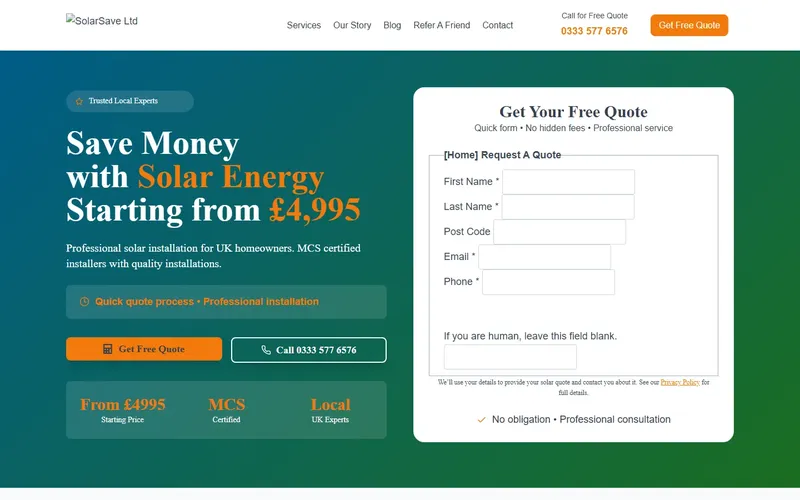
SolarSave's old website Before
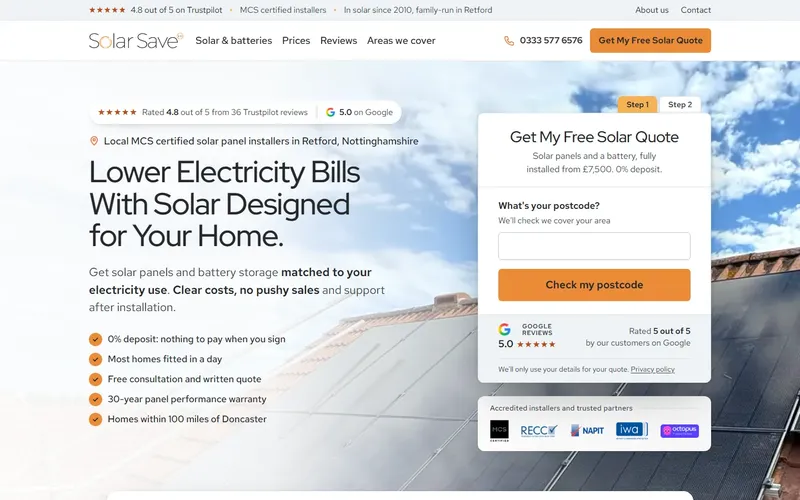
SolarSave's new renewable energy website, built by Tandy & Co After

Homepage designed in 24 hours

1341,977Times a day Google showed SolarSave's site: before launch, then two days after. It settled at about 1,500.

Google reviews

Five stars from the owners we've built for.

Google

5.0Rated 5.0 out of 5 on Google

Real reviews, in their own words.

  • SolarSave
  • NuRenewables Heating
  • DW Plumbing and Heating
Be our next review

Rated 5 out of 5 on Google3 enquiries within two days of going live

“What can I say!? Absolutely outstanding service, James has totally transformed my company website to a level I never expected!

From going live on Saturday the 17th of October I have already had 3 enquiries!!!! We are now on the 19th of October writing this review.”

James LoftusOwner, SolarSave · Google review

Rated 5 out of 5 on Google

“Excellent service and very meticulous service! Can’t recommend highly enough and the expertise and knowledge in building my website how I wanted it and even better than expected and the details and constant communication well done and many thanks your a star . Much appreciated, many thanks again 100%”

Kirk FergusonNu Renewables Heating Limited · Google review

Rated 5 out of 5 on Google

“Amazing service from James can't recommend him enough... Really helped me setting up my business page. Goes above and beyond to make sure you're happy. Lovely guy as well. 10/10 service”

Dean WesternDW Plumbing and Heating · Google review

The problem

What people check before they ring a carpenter

Someone with five doors to hang decides in minutes. Someone planning fitted wardrobes takes weeks. Either way, these are the questions your site has to answer.

  • Do you do our job?

    Someone wanting alcove cupboards wants to see alcove cupboards, not a list that ends in "and much more". A page for each job tells them they've found the right person.

  • Is your finish any good?

    Carpentry is judged up close. Tight scribes against a wonky wall, crisp mitres on architrave, doors that close with an even gap. Close-up photos prove it in a second.

  • Will you turn up and clean up?

    Most homeowners have been let down by someone. Reviews that mention you arriving when you said and hoovering before you left are worth more than anything you write about yourself.

  • Roughly what will it cost?

    Fitted furniture feels like a big unknown. A plain guide to what affects the price, or a starting figure, gets you better enquiries and fewer people who vanish after the quote.

What's on your site

The pages a carpentry website needs

Google ranks pages, not businesses. Each job you want more of gets its own page, written around what people actually type in.

  • yoursite.co.uk/fitted-wardrobes-and-alcove

    Fitted wardrobes and alcove units

    Built-in wardrobes, alcove cupboards and shelving, with projects that show the room, the materials and the finish.

  • yoursite.co.uk/door-hanging-and-fire-doors

    Door hanging and fire doors

    Internal doors, new frames and fire doors, with a section for landlords and managing agents who need the work done to standard.

  • yoursite.co.uk/media-walls-and-bespoke-piec

    Media walls and bespoke pieces

    Media walls, window seats, under-stairs storage and one-off pieces: the higher-value jobs worth showing off properly.

  • yoursite.co.uk/decking-and-garden-carpentry

    Decking and garden carpentry

    Decks, pergolas and garden rooms, the jobs people start planning on the first warm weekend of the year.

  • yoursite.co.uk/first-and-second-fix-for-bui

    First and second fix for builders

    Stud walls, joists, roof timbers, skirting and architrave, written for builders and developers who need a reliable carpenter on site.

  • yoursite.co.uk/area-pages

    Area pages

    A page for each town you cover, so you show up when people search "carpenter near me" where you actually want to work.

A general web designer

  • Home
  • About
  • Services
  • Contact

Your site, built by us

  • Home
  • Fitted wardrobes
  • Door hanging
  • Media walls
  • Decking
  • First
  • Area pages
  • Our work
  • Reviews
  • Get a quote

Website examples

Real websites, real businesses.

Three recent builds: a heat pump installer, a solar company, and a plumbing and heating firm. Same promise every time: you see it before you pay.

Heat pumps and heating · London, Herts, Beds and Essex

NuRenewables Heating

  • 27 pagesEvery service, four area pages and four advice articles
  • Heat Geek offer up frontZeroDisrupt and an instant estimate, right under the menu
  • Accreditations firstHeat Geek and Gas Safe next to the first button
See the live site
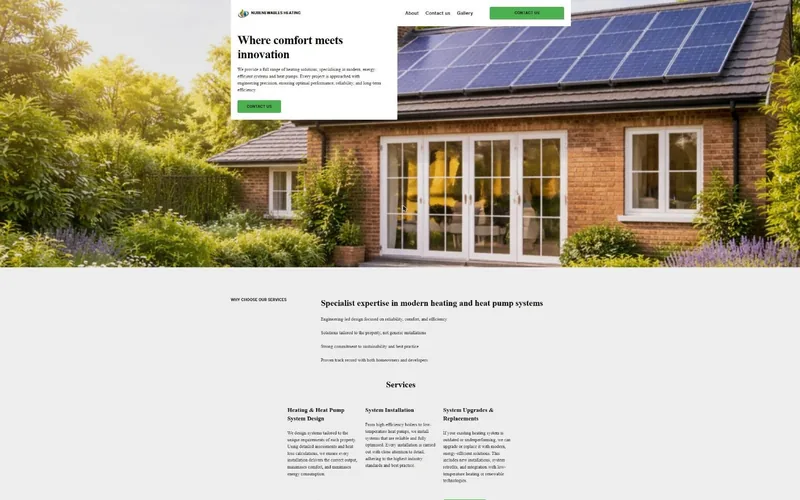
NuRenewables Heating's old heat pump installer website Before
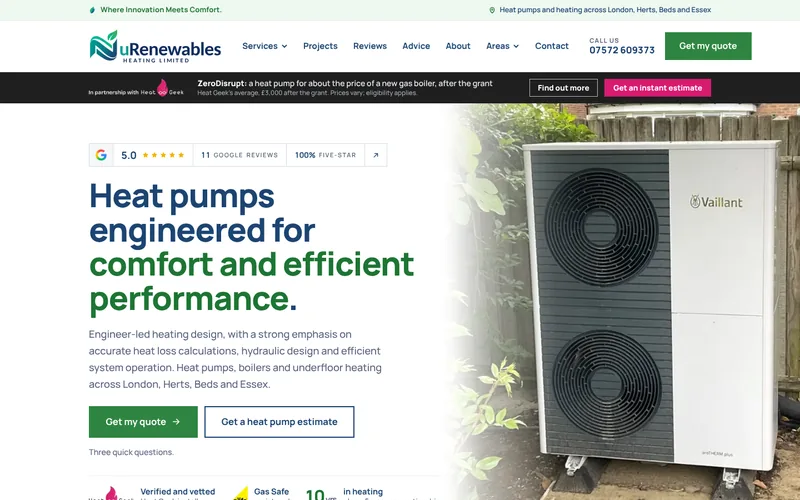
NuRenewables Heating's new heat pump installer website, built by Tandy & Co After
SolarSave's new solar website

Solar and batteries · Retford

SolarSave

1341,977Times a day Google showed the site: before launch, then two days after. It settled at about 1,500.

A 72-page site with SEO on top, so more than the £600 package. Clicks were still about 4 a day in that first week.

Read the case study
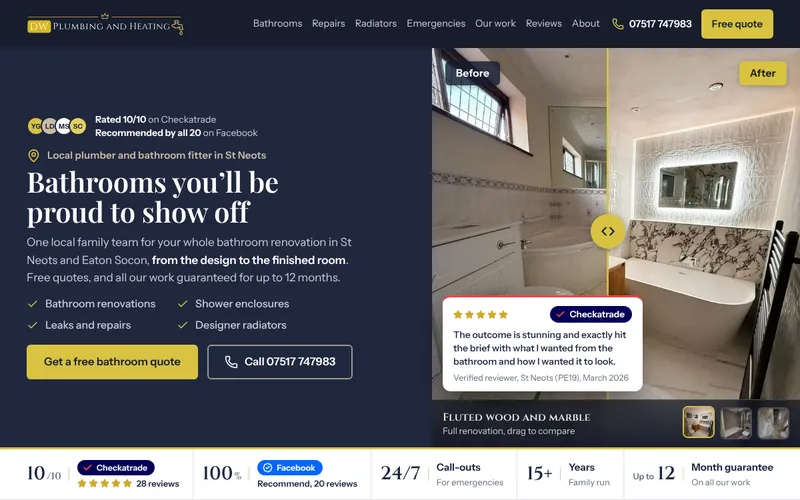
DW Plumbing and Heating's website

Plumbing and heating · St Neots

DW Plumbing and Heating

Within a dayof seeing his free design, Dean went ahead

Built around his before-and-after work and reviews.

See the live site

What it costs

Website design at one fixed price, every part listed.

No quote to wait for and no day rates. Here's everything in a website from us.

  • A fully branded 20-page websiteAll the creative design and development, custom coded for speed. No templates or page builders.

  • Every word written for youAll the content, written and checked with you. You never type a thing.

  • Built for Google from day oneEvery page set up for the searches homeowners make, with Search Console connected.

  • A page for every job you want more ofFitted wardrobes, door hanging and decking jobs. Google sends people to the right page.

  • The code Google reads, on every pageInvisible to users. Gives Google clear information on what you install and where.

  • A trust section that sells for youReviews, photos of your work, and the accreditation badges you hold, up front.

  • Your grants and finance, shown properlyIf you offer them. Finance only where you're allowed to promote it.

  • One-tap enquiriesHomeowners call, WhatsApp or message you with one tap.

  • Tracking you can check yourselfYour visits and enquiries, in your own account.

  • The switch handledOld pages redirected and your email untouched. Your current site stays up until launch.

  • The first year's hostingNothing extra to pay to keep it online.

  • 90 days of tweaks and supportWant something changed after launch? Message us and it's done.

Built for carpenters

What's different about a carpenter website.

  • A page for every job

    Fitted wardrobes, doors, media walls, decking and first fix each get their own page, built for the searches people make.

  • A portfolio that sells

    Projects sorted by job type, each with the room, the materials and the town, so people find work like theirs in a couple of taps.

  • Homeowners and the trade

    Pages for homeowners with a job in mind, and a separate route for builders and managing agents who need a carpenter.

See it first

See your homepage before you pay a penny.

No deposit, no card details and nothing to sign. If you don't love it, you walk away and owe nothing.

Get My Free Homepage Design SEE IT FIRST · PAY ONLY IF YOU LOVE IT ·
  1. Step 1 · Today

    Answer a few questions

    By email. Your business, what you do and the areas you want work from.

  2. Step 2 · Within 24 hours

    We design your homepage

    Designed and written for you, and sent as a link you can open on your phone.

  3. Step 3 · You decide

    Only pay if you want it

    Love it, and we build the rest. If not, you owe nothing.

How it works

Live in 7 working days. Hardly any work for you.

Here's every step, start to finish. Most of them are ours.

  1. Day 1

    A quick call

    Or a few questions by email.

  2. Within 24 hours

    Your homepage design

    Free, and yours to look over.

  3. When you're ready

    You approve it

    Pay once or set up the monthly plan, then send your photos.

  4. Within 7 working days

    Your site goes live

    Every page built and checked with you, on your own domain.

  5. The next 90 days

    Tweaks and support

    Message us and it's done.

What it takes from you

  • A few answers about your business
  • Photos of your work. Phone photos are fine
  • A look over the pages before launch
Stephanie and James, who design and build every Tandy & Co website
StephanieDesign and branding · 13+ years in energy JamesSEO and strategy · 10+ years in SEO

Who builds it

Two people. No handoffs.

There's no account manager and no junior. The two people you talk to are the two people who build your site.

  • Stephanie designs it, from the layout to your branding. She brings 13+ years in the energy industry, and an eye for what makes a homeowner trust a firm.
  • James builds it for Google. He plans every page around what homeowners search for, and tests on our own sites first.
  • You deal with us directly. Same-day replies, seven days a week, from 6am to midnight.

“We will never lie to a client, even when telling the truth costs us money.”

James and Stephanie

One firm per trade, per area

Your town is yours.

We take one firm per trade in the town where they're based. It doesn't cover everywhere they're willing to travel. Once we build your website, we won't take on another firm in your trade based in your town. Plenty of designers build for the firm down the road. We won't.

When a town's taken, it's taken.

  • Taken

    Solar · RetfordSolarSave

  • Taken

    Heat pumps · RainhamNuRenewables Heating

  • Taken

    Plumbing · St NeotsDW Plumbing and Heating

Map of the UK showing the two towns already taken: solar in Retford, and heat pumps in RainhamRetfordRainham
Taken by a client. Everywhere else is open, for now.

Your options

Your own website, ads or bought leads?

Your own website
£600 once, or £50 a month for 12 months. Enquiries come to you only, and the site is yours to keep.
Google Ads
Quick to start. You pay for every click, and enquiries stop the day you stop paying.
Bought leads
Quick to start. You pay for every lead, it's often shared with other firms, and enquiries stop when you stop.

The guide

Carpentry websites, explained.

How people find and choose a carpenter

Almost nobody types "carpenter" and stops there. They type the job: "fitted wardrobes Wakefield", "internal doors fitted", "media wall near me", "alcove cupboards". Then they open three or four websites, look for about as long as it takes the kettle to boil, and ring one.

That gives a carpenter's website two jobs. First, show up for the job they typed, which means having a page about that job. Second, win the side-by-side comparison with the other three, which comes down to photos, reviews and how easy you are to get hold of.

It helps to know who's looking. Carpentry customers tend to fall into three groups, and each wants something different:

  • Homeowners with a quick job. Doors, skirting, a loft hatch, boxing in pipes. They want to know you do it and roughly when you're free, and they want to ring you now.
  • Homeowners planning something bigger. Fitted wardrobes, alcove units, a media wall, a deck. They take weeks to decide, look at your work several times and often show it to someone else before they get in touch.
  • Builders, landlords and managing agents. First and second fix, fire doors, repairs between tenancies. They want reliable, carded and available, and they come back if you are.

One "all aspects of carpentry" page can't talk to all three. Separate pages can.

What good carpentry website design looks like

Good carpentry website design isn't about clever effects. It's about putting the right proof in front of the right person, quickly, on a phone. This is what each part of the site has to do.

PageWhat the visitor wants to knowWhat the page shows
HomepageIs this a local carpenter who does our job?One line on what you do and where, your three best projects, reviews and a call button
Job pagesHave you done this before?Photos of that job only, what's involved, how long it takes and what affects the price
PortfolioIs the finish good enough for our house?Projects sorted by job type, each with the room, the materials and the town
AboutWho's turning up at our door?Your face, your van, how long you've been at it and how you work
Area pagesDo you cover our town?The towns you work in, with jobs you've done there
ContactHow do we get a price without a fuss?Tap to call, and a short form that takes measurements and photos

The quote form matters more than people think. For fitted furniture, ask for rough measurements and a couple of photos of the space. You can often give a ballpark from those and skip the evening visit to someone who was only browsing.

Bespoke joinery portfolios and photos that sell

On fitted and bespoke work, your portfolio is the sales pitch. Someone about to spend a few thousand pounds on alcove units wants to see units like the ones they're picturing, in a house like theirs.

So we build the portfolio around projects, not a wall of thumbnails. Each project gets a short write-up: the room, what the customer wanted, the materials (sprayed MDF, oak, painted pine), any awkward bits you solved, like a sloping ceiling or a wall that's 20mm out, and the town. That gives people something to read and gives Google real words to work with.

How to photograph carpentry on your phone

  1. Shoot in daylight. Open the curtains, turn off the yellow ceiling light and skip the flash. Daylight shows the true colour of timber and paint.
  2. Clear the room. Tools, dust sheets and offcuts out of shot, and ideally before the customer fills the shelves.
  3. Get one wide shot, straight on. Stand back, hold the phone level and get the whole piece in. Wonky angles make straight joinery look crooked.
  4. Then get close. Scribes against the wall, mitres on architrave, the shadow gap round a door, the joints on a drawer. This is where you beat the cheaper quote.
  5. Show it working. Doors open and closed, drawers pulled out, the inside of a wardrobe with its rails and shelves.
  6. Take a before from the same spot. An empty alcove next to a finished one tells the story without a word.
  7. Hold the phone sideways. Wide photos fit a website far better than tall ones.

Ten good photos of three jobs beat a hundred dark ones. And skip the stock photos: homeowners can spot a catalogue kitchen a mile off, and it makes them wonder what your real work looks like.

Winning work from builders, landlords and managing agents

Trade work is steadier than one-off domestic jobs, and the people handing it out still check your website. A builder who's been let down by a carpenter wants to see that you do first and second fix, which areas you cover, whether you hold a CSCS card and how much notice you need. Give them a page of their own, with a direct number.

Fire doors are worth a page too, if you do them properly. Since 23 January 2023, the Fire Safety (England) Regulations 2022 have required whoever is responsible for a block of flats with a top floor more than 11 metres up to check communal fire doors at least every three months and flat entrance doors every year. Managing agents need carpenters for the repairs those checks turn up, and they search for them.

A fire door page should say which work you take on (hanging, adjusting, seals and closers, full replacement), how you record it, and any third-party certification you hold, such as BM TRADA's Q-Mark Fire Door Installation scheme. If you don't hold one, the page says what you do and leaves it there. We only put certificates on a site when you actually have them.

What websites for carpenters cost, and when they're worth it

There are three usual routes. Build it yourself on a website builder, which is cheap in money and expensive in evenings. Hire a big agency, which often runs into thousands. Or hire specialists who build for trades.

Our website is £600 one-off, or £50 a month for 12 months, with no VAT and no deposit. The first year's hosting is included. After that, hosting is £20 a month if you keep it with us. You see your homepage design within 24 hours of the set-up call, before you pay anything.

A worked example, with made-up numbers. Say you're a carpenter in Wakefield and a set of fitted alcove units leaves you £600 after materials. If the site brings in two extra sets in its first year, it has covered itself and a year of hosting, with some left over. Put your own figures into the calculator above.

And the honest bit. If builders and word of mouth keep you booked three months ahead with work you enjoy, you may not need a new site yet. A site earns its keep when you want more of one kind of job, more homeowners in a new area, or less reliance on a single builder.

Five mistakes we see on carpentry websites

  1. One page for everything. A page about doors, decks and wardrobes all at once is a weak match for each of them. Split them up.
  2. No town names. If the site never says where you work, Google has to guess. Say it plainly, and give your main towns their own pages.
  3. Photos with no story. Eighty unlabelled images make people work. Ten projects with a couple of lines each sell better.
  4. A hidden phone number. Someone wanting a door hung this week wants to ring, not hunt for a contact page. Put a call button on every page.
  5. Carpentry and joinery jumbled together. If you make staircases in a workshop and hang doors on site, both can go on the site, but each needs its own page. If joinery is your main trade, our page on websites for joiners is the better fit.

Getting the finished site in front of more people is a separate job, and that's what SEO for carpenters covers, month to month, if and when you want it. Everything that comes with the build is on the main website page, and if you'd like to see your own site before deciding anything, ask for a free website mockup.

Related

What else we can do for you.

Questions

Websites for carpenters: straight answers.

Something else on your mind? Ask us. You'll get a straight answer from one of us, usually the same day.

Ask us on WhatsApp
Do carpenters really need a website?

Not always. If builders and word of mouth keep you booked months ahead with work you like, a website is a nice-to-have. It earns its keep when you want more of a certain job, like fitted furniture, or more homeowners in a new area. It's also where people check you out after a recommendation, so a poor one can quietly cost you work.

What should a carpentry website include?

One clear line saying what you do and where, a page for each main job, a portfolio sorted by job type, your Google reviews, a photo of you, the towns you cover and an easy way to call or send measurements and photos. Add any cards or certificates you actually hold, like a CSCS card or fire door certification.

What's the difference between websites for carpenters and websites for joiners?

Customers rarely care about the label, but they do search differently. Joiners tend to make things in a workshop, like staircases, windows and doors. Carpenters tend to fit and build on site. If you do both, the site covers both, with the main pages leaning towards the work you want more of, so each page stays focused for Google.

Can the site win work from builders and managing agents as well as homeowners?

Yes, with separate routes. Builders want to see first and second fix experience, your CSCS card, the areas you cover and how much notice you need. Managing agents want fire door and repair work done properly, with paperwork they can file. Homeowners want photos, reviews and a quote. Each group gets its own page and a quick way to reach you.

We don't have good photos of our work. What should we take?

Take them in daylight, once your tools are cleared away and before the customer fills the room. Get one wide shot straight on, then close-ups of the joints, scribes and hinges, plus a before shot from the same spot. A recent phone is fine. We'll tell you which photos are worth using and which jobs to photograph next.

How much does a carpentry website cost?

Ours is £600 one-off, or £50 a month for 12 months, with no VAT and no deposit, and you see your homepage design before you pay anything. The first year's hosting is included. After that, hosting is £20 a month if you keep it with us. A DIY website builder costs less up front but eats your evenings, and a big agency often costs a lot more. Our cost guide on the blog compares the options honestly.

Do I own the website?

Yes. Pay upfront and it's yours from day one. On the monthly plan, it's yours after the 12th payment. Your domain stays in your name throughout.

What does hosting cost after the first year?

The first year is included. After that, keep it with us for £20 a month, with small changes free while we host it. Or take your website files and host it anywhere. No lock-in.

What if I don't like the design?

Then you owe nothing. If you like the style, we fine-tune the details as we build. If it's not for you at all, we can try a completely different design, or you can walk away.

Free homepage design

See your new homepage first.

Tell us about your business and we'll design your homepage free, within 24 hours. No card details, nothing to sign.

Get your free homepage design

What do you need?

Your details are only used to reply to you.

Get my free design