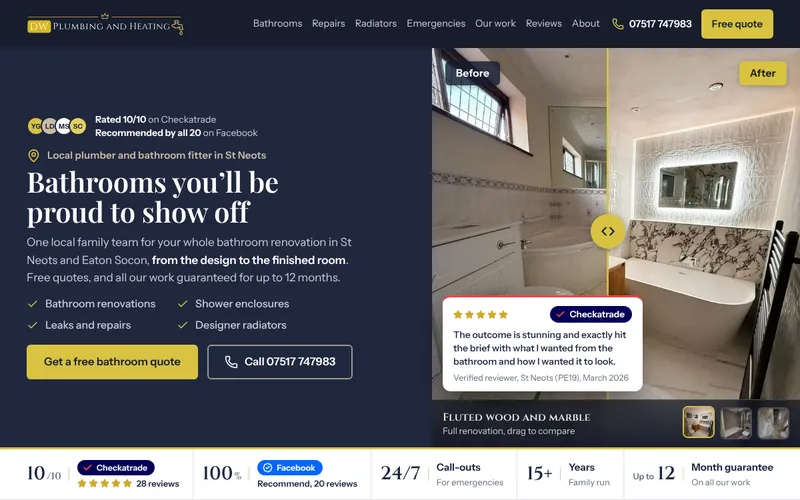
Web design for plumbers starts with two kinds of customer
Every plumber's website gets two very different visitors, often on the same day. The first has water coming through the kitchen light. They're on a phone, they've searched "emergency plumber" or "burst pipe" plus their town, and they'll ring the first plumber who looks local, real and awake.
The second is planning a new bathroom or pricing up a combi swap before winter. They open three or four plumbing websites in tabs, read them over a brew, show their partner, and come back a week later. They want photos, a rough idea of cost and a reason to trust you with a few thousand pounds.
Most plumbing websites are built for neither. Good web design for plumbers builds for both, and keeps them apart:
- Urgent pages (leaks, no hot water, breakdowns) are short. Your towns, your hours, whether you charge a call-out fee, and a call button that never leaves the screen.
- Planned pages (bathrooms, boiler installs, heating upgrades) are longer. Photos of your own jobs, how the job runs, a guide price if you're comfortable giving one, and a short quote form for people who'd rather not ring at 9pm.
Say you're a plumber in Doncaster who wants more combi swaps and fewer dripping taps. The homepage still catches the emergencies, because they pay the bills in a quiet week, but the photos, the menu order and the calls to action all lean towards boilers. Your website should sell the work you want, not just list everything you can do.
The plumbing jobs that pay best, and the pages they need
Google ranks pages, not businesses. If your site has one "Services" page that mentions boilers, bathrooms, leaks, drains, radiators and heat pumps in a single paragraph, Google has nothing strong to rank for any of them. A page per job fixes that, and it gives each customer a page about their actual problem.
| Job | What people type | What the page has to show |
|---|
| Boiler replacement | "combi boiler replacement", "new boiler cost", "boiler installer near me" | Your Gas Safe number, the makes you fit, warranty length, a guide price, photos of tidy installs |
| Bathroom installation | "bathroom fitters near me", "new bathroom cost", "walk-in shower" | Before and after photos, how long you're on site, whether you do the tiling, a quote form |
| Boiler repair and servicing | "boiler repair", "no hot water", "boiler service near me" | Areas, response times, the makes you work on, a call button |
| Landlord gas safety checks | "landlord gas safety certificate", "CP12" | How booking works, how fast the certificate arrives, a price for agents with several properties |
| Leaks, taps, toilets and drains | "leaking toilet", "blocked sink", "plumber near me" | Plain English, your call-out policy, a call button |
Landlords deserve their own page. They need a gas safety check every 12 months from a Gas Safe registered engineer, so a landlord or letting agent who likes you comes back every year, often with more than one property.
Then add a page for each town you genuinely cover, with jobs you've done there. That's how a plumber in Rotherham shows up for "plumber Rotherham" instead of just the street the van is parked on. Pushing those pages up the results over the following months is the job of SEO for plumbers, and the website is the base it builds on.
Gas Safe, WaterSafe and the proof customers check
Plumbing customers are letting a stranger into their house to work on gas and water, so they check. Your website should make checking easy.
Gas Safe Register
By law, anyone working on gas appliances as part of their business in Great Britain, Northern Ireland, the Isle of Man and Guernsey must be on the Gas Safe Register. Council advice tells homeowners to check twice: the engineer's ID card, which shows the type of gas work they're qualified for, and the register itself. So your Gas Safe number goes on every boiler page, alongside the kinds of gas work you're registered for, with a link to the Gas Safe Register so people can look you up in seconds.
WaterSafe and trade bodies
WaterSafe is the national register of approved plumbers, backed by the approved contractor schemes run by APHC, CIPHE, SNIPEF and WIAPS. Approved plumbers can carry out certain work without telling the water supplier first, and can issue certificates of compliance. If you're on it, say so on your bathroom and water mains pages, because it's a check not every plumber can offer.
Everything else you hold
TrustMark registration, CIPHE or APHC membership, an unvented cylinder qualification, a boiler maker's installer scheme that lets you offer a longer warranty: if you hold it, it goes where people make their decision. If you don't, it doesn't appear. We never add a badge you can't back up, because a customer who finds out the hard way doesn't leave a nice review.
Photos and reviews that sell a plumber
A plumbing website lives or dies on proof. Not "fully qualified and reliable", because every plumber in the area says that. Proof is the stuff only you can show:
- Your own photos. A neat boiler cupboard with the pipework clipped straight. A bathroom before (avocado suite, black sealant) and after. A phone camera is fine. A stock photo of a grinning model holding a wrench tells people you've got nothing of your own to show.
- Captions that do some work. "Combi swap in Mexborough, in and out in a day" tells the next customer, and Google, far more than a gallery of untitled pictures.
- Reviews next to the job they're about. A review that mentions a bathroom belongs on the bathroom page. Google reviews carry more weight than quotes typed into the site, and you should never write them or let anyone write them for you.
- A real person. Your name, your face, your van. People are letting you into their home, often while they're at work.
Calls, quote forms and the calls you miss
For a plumber, the phone is the main way in. On a phone screen your number should be tappable, visible without scrolling, and follow people down the page. Nobody with a leak fills in a form.
Forms still matter for planned work. Someone choosing a bathroom at 10pm won't ring you, but they will send a short form. Keep it short: name, number, postcode and what they want done. Every extra field is another reason to give up. A bathroom form can also ask a rough budget and when they'd like it done, so you know who's serious before you drive round to measure up.
Then there are the calls you can't take. You're under a sink or up in a loft, the phone rings out, and that customer rings the next plumber on the list. A missed-call text back sends them a message straight away, so they wait for you instead of carrying on down Google.
What a plumber's website costs in 2026
Prices for plumbing websites vary more than boiler quotes. This is what's being advertised to UK trades as of October 2026:
| Route | Typical price | The catch |
|---|
| DIY website builder | Roughly £10 to £30 a month | You write, design and fix it yourself, usually in the evenings |
| Monthly trade website deal | Around £49 to £95 a month, sometimes plus a build fee | Often you don't own the site, so it disappears when you stop paying |
| Freelance web designer | Usually £500 to £1,500, one-off | Quality varies a lot, so look at their work and ask who writes the words |
| Big agency | From around £5,000 | More people and meetings than most plumbing firms need |
The website is £600 one-off, or £50 a month for 12 months, with no VAT and no deposit, and you own it outright once you've paid. The first year's hosting is included. After that, hosting is £20 a month if you keep it with us.
And if you're booked solid from word of mouth and don't want more work, you may not need a new website yet.
Plumbing website mistakes, and how we build yours
The same problems turn up on plumbing websites again and again:
- One services page for everything, so nothing ranks and nobody finds their job.
- A phone number that's an image, sits in the footer, or can't be tapped on a phone.
- "24/7 emergency plumber" when you actually stop answering at 8pm. Customers notice, and so do your reviews.
- No towns named anywhere, so customers and Google have to guess where you work.
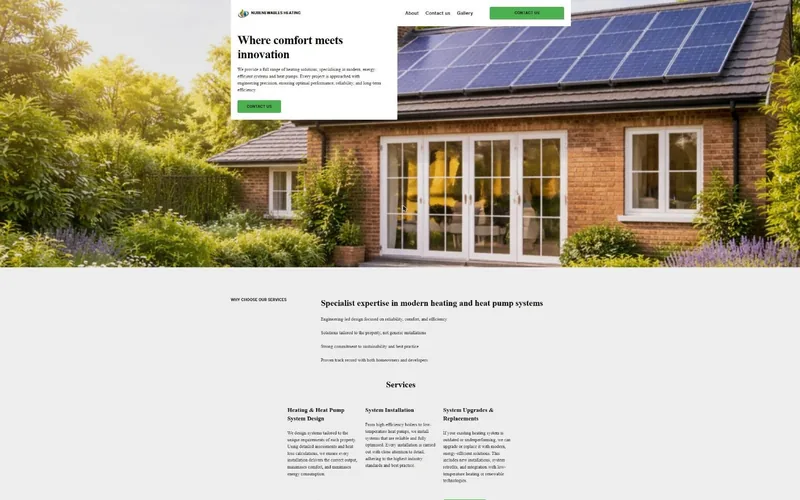
- Heat pumps and commercial work listed because the template had them, not because you do them.
- A Gas Safe logo with no number, which looks like you're hiding something.
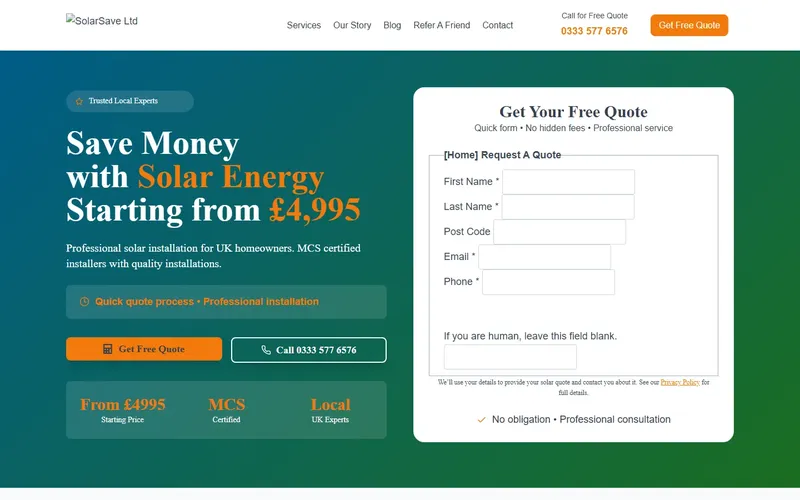
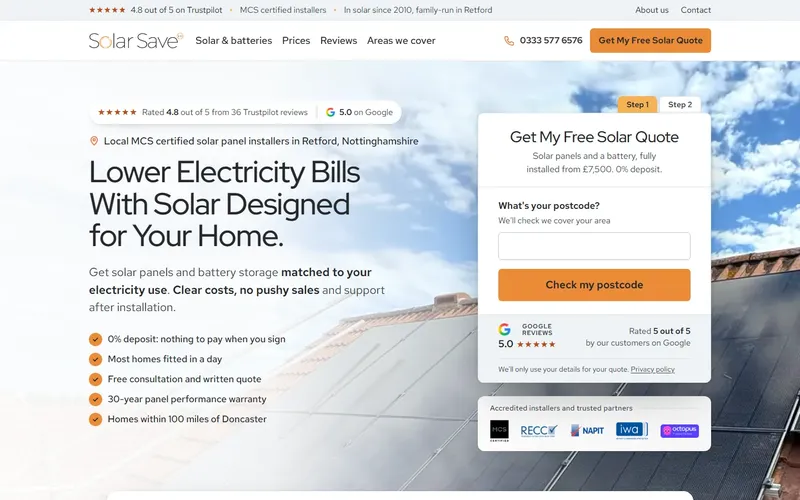
Here's how we build a plumber's website instead. You tell us on a short set-up call which jobs you want more of, which towns you cover and how you like to be contacted. Your homepage design arrives within 24 hours of that call, before you pay anything. If you like it, you pay and we build the rest, live within 7 working days of your start date. Then we spend 90 days tweaking it based on what the tracking shows.
Everything that's included is on the main website page. For the bigger picture on getting a plumbing business more work, start with our page on marketing for plumbers.







 Before
 After