Website design for HVAC: two kinds of customer
Most HVAC firms sell to two very different people. One is a homeowner: a hot loft bedroom, a home office that's unbearable in July, or someone looking at a heat pump to replace an old boiler. They search "air conditioning installers" or "heat pump installer" plus their town, compare a few websites and want a rough price.
The other is a business: an office manager, a restaurant owner, a school business manager, a facilities manager with several sites. They search "commercial air conditioning", "kitchen extraction" or "air con maintenance contract", and they care less about price than about whether you'll turn up when a unit fails on the hottest day of the year.
One page can't talk to both. The homeowner wants reassurance and a quote. The business wants proof, certificates and a contract. Good website design for HVAC gives each its own route from the homepage, so nobody has to wade through the other's information.
HVAC website content that wins work
Good HVAC website content answers the questions people would otherwise ring to ask. For homeowners, that means what an installation involves and roughly what it costs, how noisy the outdoor unit is and where it can go, how often it needs servicing, and for heat pumps, how the grant works.
For businesses, the content shifts to proof:
- Case studies: the type of building, the system you fitted, how you worked round opening hours and what the customer has now.
- Maintenance contracts: visit frequency, what's checked, response times and the paperwork you provide.
- Certificates and accreditations, with links so a procurement team can check them.
Web design for heating and ventilation companies
If your work leans towards heating and ventilation rather than cooling, the same rules apply with different pages: commercial ventilation, MVHR, kitchen extraction and heating systems. Kitchen extract cleaning is worth its own page if you do it, because insurers such as AXA expect commercial kitchen extracts to meet TR19 Grease, the BESA specification. If you mostly work on boilers and central heating, our page on websites for heating engineers will suit you better.
F-Gas, Refcom and MCS: show them where it counts
Certification is the first thing a careful customer checks, so it shouldn't be buried in the footer.
F-Gas. A company that installs, repairs, maintains or decommissions stationary air conditioning, refrigeration or heat pump equipment for other people must hold F-Gas company certification from an approved body, such as Refcom or the F-Gas Register run by Quidos, and renew it every three years. Engineers need their own personal qualification too. Your company certificate goes on the site with a link to the register, so people can check it.
MCS. If you fit heat pumps, MCS certification is what lets your customers claim the Boiler Upgrade Scheme grant, because only an MCS certified installer can apply for it. As of October 2026, Ofgem lists £7,500 off air source and ground source heat pumps, £9,000 in eligible off-gas-grid homes until 31 March 2027, and £2,500 off air-to-air heat pumps in homes. Those figures change, so a heat pump page should state the current ones, link to Ofgem and promise nothing.
The air-to-air grant matters to air conditioning firms. Most modern split systems heat as well as cool, but the grant has its own eligibility rules, so check Ofgem's guidance before you mention it to customers.
Maintenance contracts are the real product
For a lot of HVAC firms, the install is the start of the relationship, and the maintenance contract is where the steady money is. Your website should sell contracts as hard as it sells installs.
There's a legal reason businesses need you, too. Under the F-Gas leak checking rules, whoever operates equipment holding 5 tonnes of CO2 equivalent or more of F-Gas is responsible for having it leak checked at least every 12 months, and more often for bigger systems. Plenty of business owners don't know that until someone tells them. A contracts page that explains it plainly, and shows you keep the records, turns a legal duty into a reason to sign up with you.
A good contracts page covers what each visit includes, how often you come, how you work round opening hours, your breakdown response times and the paperwork you leave for their records and their insurer. Then give it its own enquiry form, separate from one-off installs, so contract enquiries don't get lost in the pile.
Heatwaves, heating season and the phone
HVAC demand comes in waves. A hot week in summer and everyone wants air conditioning yesterday, just when you're flat out and can't answer the phone. Then the heating side picks up in autumn. Your website can smooth some of that out.
In spring, it pushes servicing and early installs, so customers book before the rush. In a heatwave, a clear note on the homepage about current lead times stops people giving up. And because you'll miss calls on the busiest days, missed-call text back sends every caller a text straight away, so the enquiry isn't lost to the next firm on the list.
What it costs, and how we build it
Our website is £600 one-off, or £50 a month for 12 months, with no VAT and no deposit. The first year's hosting is included. You see your homepage design within 24 hours of the set-up call, before you pay anything, and we write every page from that call, with you checking the technical details.
A worked example, with made-up numbers. Say one restaurant maintenance contract is worth £1,200 a year to you. Win a single contract through the site and it has paid for itself in the first year, before you count the installs that customer leads to. Try your own figures in the calculator above.
The honest bit: if all your work comes from main contractors and tenders, a website matters less, because it's mainly a credibility check, so keep it simple and accurate. If you want more direct work from homeowners and businesses, the site is where it starts, and SEO for HVAC is how more people find it. To see yours first, ask for a free website mockup.




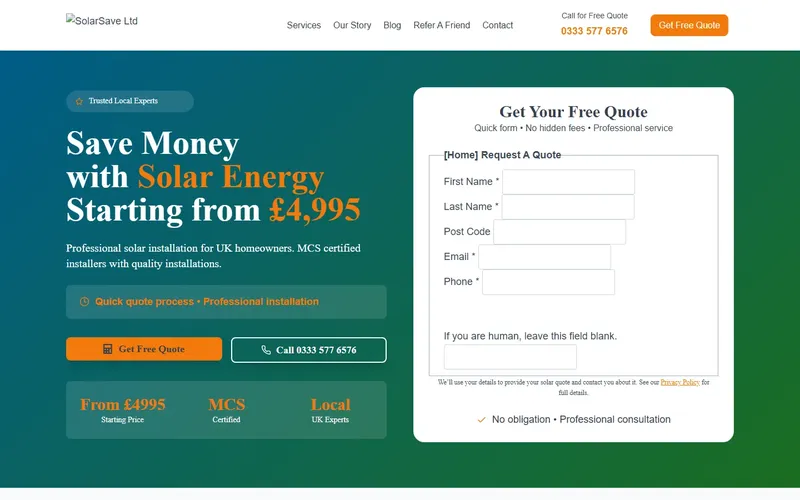
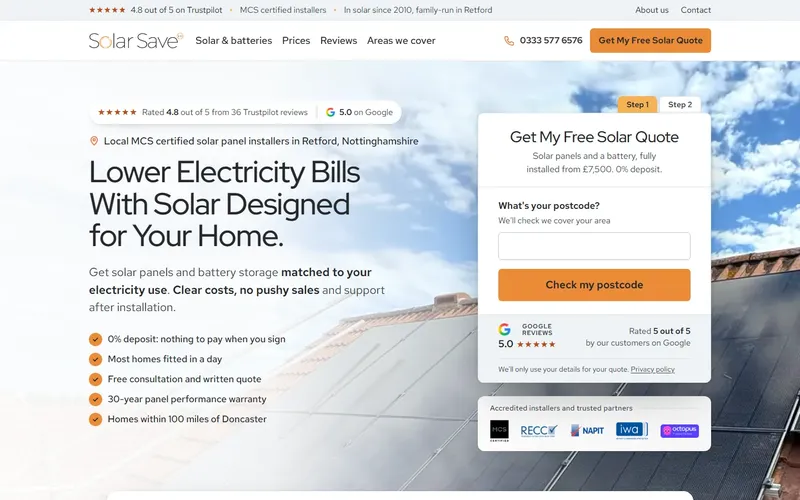



 Before
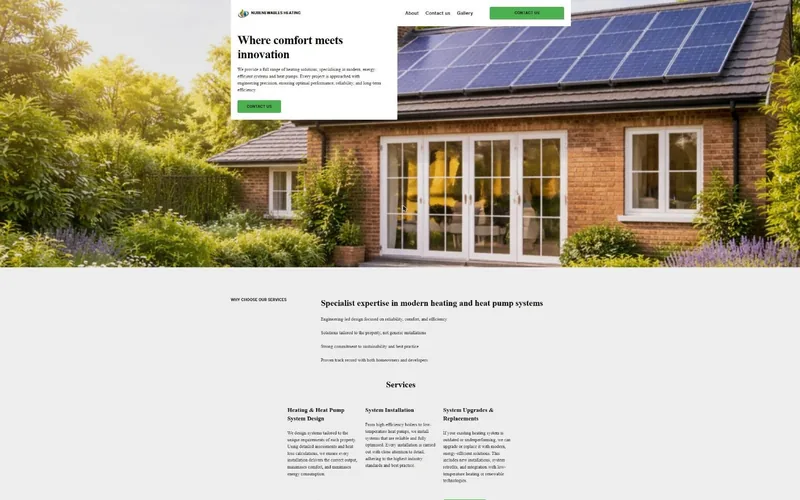
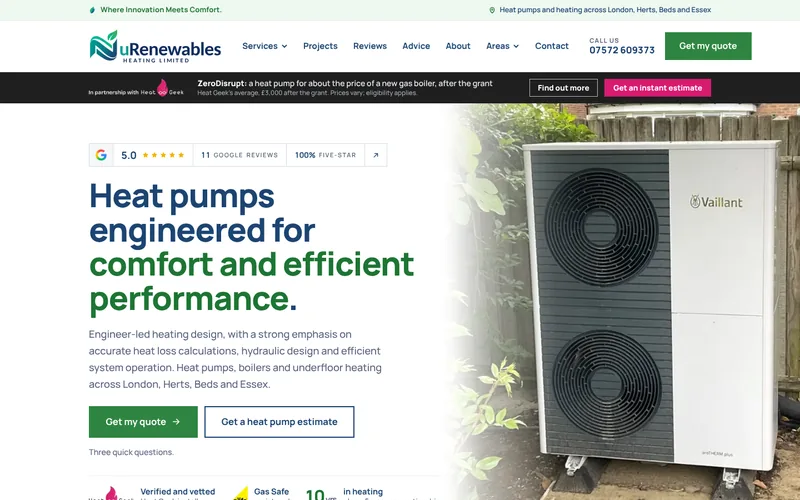 After